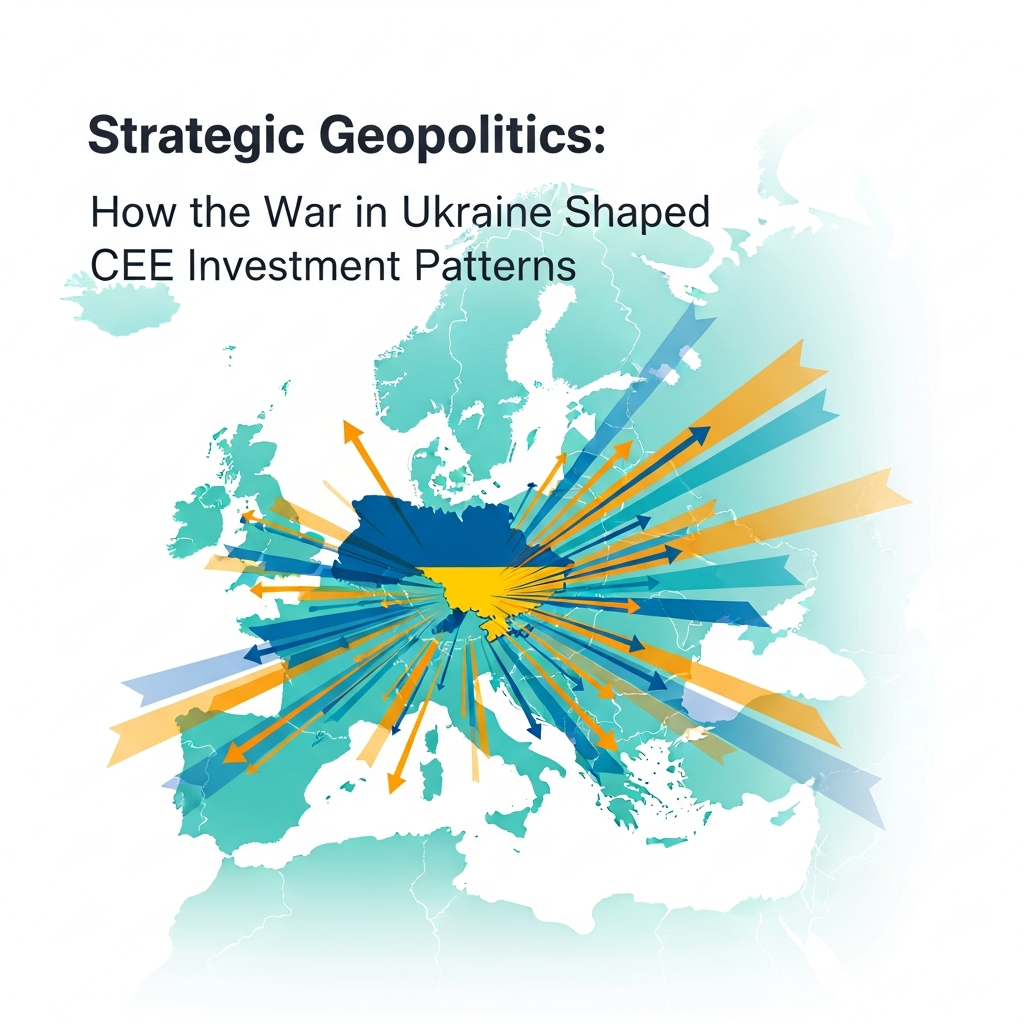
Strategic Geopolitics: How the War in Ukraine Shaped CEE Investment Patterns
The macroeconomic landscape of Central and Eastern Europe underwent a radical transformation over the past four years. Global capital allocation strategies completely pivoted following the geopolitical ruptures of 2022. Foreign direct investment initially fled the Eastern Flank, fearing rapid military escalation and severe supply chain contagion.
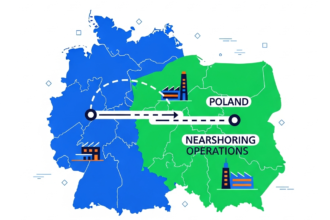
Today, the reality on the ground tells a vastly different story of industrial entrenchment and strategic nearshoring. Cross-border trade volumes hit historic highs, heavily driven by the massive logistical requirements of Ukraine’s ongoing defense and reconstruction. Regional governments rewrote their national budgets to prioritize unprecedented defense spending, fundamentally altering the domestic corporate ecosystem. Understanding these shifting dynamics remains critical for institutional investors allocating capital in 2026.
The Initial Shock vs. Long-Term Resilience
The initial 2022 invasion caused severe capital flight from CEE markets, but by 2026, the region demonstrated profound resilience with a projected 2.9% GDP growth and normalized FDI inflows.
Capital Flight and Immediate Reactions
When tanks rolled across the border in February 2022, corporate boards panicked. Institutional investors froze capital expenditures across the Eastern Flank due to the immediate proximity of the conflict zone. Supply chain interruptions sent aggressive shockwaves through manufacturing sectors deeply reliant on Ukrainian metallurgical products and Russian hydrocarbons.
Currency volatility hammered regional markets instantly. The Polish Złoty and Hungarian Forint experienced severe downward pressure as speculative capital fled toward safe-haven assets. Risk assessment models blindly categorized the region as highly unstable, pausing critical nearshoring operations for several consecutive quarters.
The 2026 Rebound and Nearshoring Boom
In our practice tracking CEE markets, we witnessed a dramatic reversal starting late 2024. Global capital recognized the ironclad nature of NATO’s Article 5 security guarantees. Institutional funds returned with massive capital deployments aimed directly at strategic industrial realignment.
The region demonstrates remarkable economic agility today. Macroeconomic projections clearly indicate a robust 2.9% GDP growth for the CEE bloc in 2026. This impressive performance outpaces Western European averages significantly, establishing the area as a primary growth engine for the continent.
Foreign direct investment shifted its fundamental character entirely. Companies no longer view the region merely as a low-cost production floor for basic assembly. High-value R&D centers, automated manufacturing facilities, and complex shared service centers dominate the current investment pipeline.
European funding mechanisms act as a powerful catalyst for this regional economic acceleration. Substantial capital flows from the EU Recovery and Resilience Facility inject billions into green energy infrastructure. Investors aggressively leverage these public funds to de-risk large-scale private capital deployments in Polish and Romanian manufacturing zones.
Poland’s Emergence as the Logistics Hub for Reconstruction
Poland serves as the primary logistical artery for Ukrainian reconstruction, heavily supported by the June 2026 Ukraine Recovery Conference in Gdańsk and targeted cross-border infrastructure funds.
Physical Infrastructure and Border Capacity
Geography dictated Poland’s undisputed role in securing the Ukrainian supply chain. The Rzeszów-Jasionka airport rapidly transitioned from a quiet regional strip into the busiest strategic airlift hub in Europe. High-capacity road and rail networks connecting directly to Lviv form the structural backbone of the entire reconstruction pipeline.
European transport corridors underwent massive, accelerated modernization. The European Union directed unprecedented funding toward upgrading the Polish-Ukrainian border crossings to handle heavy commercial freight. You clearly see these physical bottlenecks dissolving under the weight of sustained, targeted infrastructure investment.
Financial Instruments and Corporate Positioning
Data from recent corporate setups shows that multinational firms establish their primary reconstruction headquarters in Warsaw and Gdańsk rather than directly inside Ukraine. This strategic positioning minimizes prohibitive insurance premiums while maximizing operational proximity to the border. Operating from Poland allows civilian contractors to secure predictable, EU-backed financing seamlessly.
The June 2026 Ukraine Recovery Conference in Gdańsk solidified this structural reality. European public-private partnerships focus intensely on mitigating cross-border financial risks for private enterprises. State-owned development banks provide crucial guarantee frameworks under the massive EU Ukraine Facility.
Access to institutional capital requires a secure, legally stable operational base. Logistics providers heavily leverage Polish distribution centers to warehouse dual-use goods and critical raw materials safely. Recent industry surveys confirm that 56% of Western European companies planning CEE investments choose Poland as their primary target destination.
Regulatory Alignment and Cross-Border Operations
Structuring the legal frameworks between EU member states and Ukraine requires precise strategic planning. Customs regulations rapidly evolved to facilitate the frictionless transit of critical reconstruction materials. Polish logistics operators dominate this specialized niche, holding invaluable expertise in border compliance and expedited freight forwarding.
Managing tax liabilities across these jurisdictions demands robust advisory support. Transfer pricing models must account for the unique risk profiles associated with wartime supply chains. Smart corporate structuring guarantees strict legal compliance while maximizing the utility of bilateral investment treaties active in 2026.
Defense Budget Expansions and Domestic Contracting
CEE nations radically increased military expenditure, spearheaded by Poland allocating a record 4.8% of its GDP to defense in 2026, triggering massive localized defense contracting.
Record-Breaking Military Expenditure
The geopolitical security paradigm across the Eastern Flank shifted permanently. Poland aggressively pushed its defense spending to an unprecedented 4.8% of GDP in the 2026 national budget framework. This staggering allocation translates to roughly 200 billion PLN injected directly into rapid military modernization and localized procurement.
The Baltic states followed this aggressive trajectory without hesitation. Lithuania, Latvia, and Estonia consistently maintain military spending levels well above the standard 2% NATO minimums. This historic regional arms buildup creates a massive, sustained demand for advanced defense systems and supporting logistics operations.
The Domestic Production Mandate
Procurement strategies evolved drastically beyond simple foreign military sales. Local governments strictly demand localized production, deep technology transfers, and integrated joint ventures. You cannot simply export finished hardware into the CEE market and expect to win massive government tenders.
We consistently see that foreign prime contractors must partner with local CEE manufacturers to secure major defense contracts. Offset agreements and high domestic industrial participation remain mandatory legal prerequisites for large-scale procurement programs. Integrating local supply chains builds long-term industrial sovereignty for the host nations.
Technology transfers form the absolute core of modern CEE defense procurement. Original equipment manufacturers must establish authorized maintenance centers directly on Polish or Romanian soil. This strict requirement guarantees operational readiness for the military while rapidly upskilling the local civilian engineering workforce.
This dynamic birthed a highly lucrative ecosystem of defense-adjacent enterprises. Dual-use technologies, aerospace engineering, and cybersecurity firms thrive massively under the umbrella of state defense spending. Private equity funds now actively target these specialized, defense-oriented SME sectors across Poland, Romania, and the Baltics.
Regional Defense Spending Commitments
| Country | 2026 Defense Budget (% of GDP) | Key Strategic Procurement Focus Areas |
|---|---|---|
| Poland | 4.8% | Aviation, Air Defense, Heavy Armor, Cyber |
| Lithuania | ~4.0% | Border Security, Drone Capabilities, Logistics |
| Latvia | ~3.7% | Artillery Systems, Coastal Defense, Infantry Gear |
| Estonia | ~3.4% | Cybersecurity, Electronic Warfare, Ammunition |
Redefining the Eastern Flank’s Risk Premium
The geopolitical risk premium assigned to the CEE region stabilized significantly, shifting global investor focus from border proximity threats to lucrative nearshoring advantages.
Evolution of Investor Sentiment
Financial markets initially priced a massive geopolitical risk premium into all CEE assets during 2022. Corporate debt yields spiked dramatically, and venture capital flows contracted sharply across the board. Financial analysts struggled to accurately quantify the abstract threat of conflict spillover into NATO territory.
The geopolitical landscape looks entirely different and highly secure in 2026. Permanent, heavily fortified garrisons of US and NATO troops stabilized the perceived security environment. The strict implementation of robust missile defense architectures physically shields the vital industrial heartlands of Poland and Romania.
War-Risk Insurance and Structured Guarantees
Commercial institutional insurers adapted rapidly to the new normal. Specialized war-risk insurance products, heavily backed by sovereign state guarantees, unlock massive private capital flows. You can seamlessly secure comprehensive coverage for physical assets located within critical border regions.
The European Flagship Fund for the Reconstruction of Ukraine directly exemplifies this financial shift. By actively mobilizing €500 million in equity investments through junior capital buffers, public institutions absorb the initial shock risks. This sophisticated mechanism allows private investors to achieve highly acceptable risk-adjusted returns.
Consequently, the perceived regional risk premium evaporated entirely. Multinational corporations evaluate CEE locations based on workforce availability, green energy costs, and R&D tax incentives rather than geopolitical fear. The region successfully executed a transition from a perceived crisis zone to Europe’s core strategic growth asset.
Labor Force Dynamics and R&D Expansion
Human capital represents a critical variable in recalculating the region’s overall risk premium. The massive influx of highly educated professionals from Eastern conflict zones deeply enriched the regional talent pool. Tech companies eagerly absorb these software engineers and data scientists, drastically boosting the capacity of local R&D hubs.
Wage inflation certainly occurred, yet the productivity gains heavily offset the increased payroll costs. Automation and artificial intelligence integration dominate corporate capital expenditure budgets. You witness legacy manufacturing facilities upgrading to fully digitized industry 4.0 standards, securing long-term global competitiveness.
Frequently Asked Questions (FAQ)
Find swift, authoritative answers to the most common queries regarding 2026 CEE investment patterns and Ukraine’s reconstruction logistics below.
How much is Poland spending on defense in 2026?
Poland allocated a record 4.8% of its GDP to defense in its 2026 national budget, representing roughly 200 billion PLN. This constitutes the absolute highest military spending ratio within the NATO alliance.
Where is the core logistics hub for Ukrainian reconstruction?
Poland acts as the definitive logistics and staging hub. Key transfer nodes include the Rzeszów-Jasionka area for physical aid, while Gdańsk leads major financial reconstruction planning, officially hosting the massive 2026 Ukraine Recovery Conference.
Is the CEE region still considered a high-risk investment zone?
No. While regional risk premiums spiked heavily in 2022, rigorous NATO military deployments and structured EU financial guarantees largely normalized the area’s risk profile. Institutional capital now heavily prioritizes CEE for strategic corporate nearshoring.
What CEE sectors attract the most foreign direct investment in 2026?
Defense contracting, renewable energy infrastructure, and digital automation clearly lead the FDI charts. High R&D intensity sectors strongly benefit from robust technological tax incentives like the IP Box regime across Poland and the Baltic states.